Evaluating Common Types of Disinfectants
2 March 2021
This article has gathered information on a range of common disinfectants and lists the advantages and disadvantages of using them.
At MMCS Commercial Cleaning, we offer a disinfectant fogging service that uses a Hypochrolous-Acid based disinfectant that can help to keep your personal or private property more COVID-secure. Get in touch here or call us on 0191 296 6214 to book your bespoke service today
As per NHS guidelines, we recommend washing hands often with soap and warm water for at least 20 seconds to help reduce the spread of COVID-19.
Sodium Hypochlorite
Commonly known as bleach, this clear yellowish disinfectant is a staple cleaning item in many households. In the home environment, it is recommended to mix 1 part bleach with at least 40 parts water when using for disinfectant purposes. Surfaces must be cleaned with hot water and soap and have all dirt and soil removed prior to applying the diluted solution in order to ensure thorough disinfection of a surface.
Advantages:
-Affordable and accessible (found in many local supermarkets)
-Effective germ killer (it kills bacteria and viruses on surfaces)
Disadvantages:
-Can irritate the skin and be harmful if inhaled
-Can give off lethal fumes if mixed with an ammonia-based cleaning product
-Can corrode metals and damage surfaces (such as painted surfaces)
Top tip:
Never mix bleach with hot water! The hot water could spread harmful fumes and also render the bleach less effective. Always use cold water.
70% Isopropyl
Also known as rubbing alcohol, if a rubbing alcohol product has over 70% of isopropyl then it has the ability to kill a range of bacteria such as E.coli and Salmonella. It can often be found in hand sanitising gels and disinfectant wipes.
Advantages:
-Kills bacteria on skin (and can be used to treat minor grazes)
-Evaporates quickly (can be used to disinfect electronic devices)
Disadvantages:
-Not suitable for internal wounds or consumption
-Highly flammable
-Can be toxic if inhaled
Top tip:
Apply rubbing alcohol to a cotton swab and wipe over jewellery to remove dirt, bacteria and grime.
Quaternary Ammonium Compounds
Sometimes referred to as ‘quats’, you can find these compounds in a range of household cleaning products, most commonly in products that include ‘...onium chloride’ in their name. You often find quaternary ammonium compounds in disinfectants and general-purpose cleaning liquids and wipes.
Advantages:
-They have a wide spectrum germ kill ability
-Simple to use (often involve wiping over a surface using a dry cloth)
-Can be used on a range of materials without staining them
-Almost odourless (or have a pleasant smell)
Disadvantages:
-Can irritate skin, eyes and lungs
-Can have reduced activity in the presence of dirt or soil
Top tip:
Use a microfibre cloth to apply this disinfectant to surfaces, as cotton and t-shirt type cloths may cause the disinfectant solution to create bonds and render it less effective.
Hypochlorous Acid
Hypochlorous acid is able to eradicate dangerous bacteria, fungi and spores within 15 seconds. It is also one of the more natural forms of biocide (a substance that destroys living things) and can disinfect up to 300 times better than bleach. At MMCS Commercial Cleaning, we choose to use Hypochlorous Acid based products in our disinfecting services.
Advantages:
-Low contact times
-Safe for people and the environment (biodegradable)
-Can be used on a range of soft and hard materials without staining them
-Does not require workers to wear PPE when using
-Does not require ventilation of the area after use
Disadvantages:
-Can only exist in a solution that has already been prepared
-Can be difficult to maintain the correct PH level
Take a look at our office cleaning checklist for 2021
to help you to settle into a better cleaning routine.
This information is accurate as of 03/03/21 and has been adapted from:
https://www.healthline.com/health/rubbing-alcohol-vs-hydrogen-peroxide#how-to-use-rubbing-alcohol
https://www.medicalnewstoday.com/articles/rubbing-alcohol-uses#nausea
https://med.nyu.edu/pophealth/sites/default/files/pophealth/QACs%20Info%20for%20Physicians_18.pdf
https://ehs.missouri.edu/bio/labprac/disinfectants
http://solutionsdesignedforhealthcare.com/solutions/products/disinfectants/technologies/quaternary-ammonium-compounds
https://www.ursourcellc.com/faq/bleachquat.html
https://www.cleanlink.com/sm/article/How-To-Properly-Use-Quaternary-Ammonium-Products--18851
https://www.nature.com/articles/sj.bdj.2018.302
https://www.optometrytimes.com/view/hypochlorous-acid-harnessing-natures-germ-killer
https://www.optometrytimes.com/view/hypochlorous-acid-harnessing-natures-germ-killer
Water stains on wood can look unsightly and spoil the finish of furniture but fortunately those water rings don't have to stay there forever. Water stains show up as light coloured rings or clouds and can be lightened and removed easily with some natural materials. Discover how to remove water stains from wood without paying for expensive wood cleaners with our top tips below. At MMCS Commercial we have over two decades of experience in providing cleaning services across the North East. From one-off deep cleans in Newcastle to regular holiday let cleaning in Northumberland , our trained staff have got you covered. We work flexibly around your schedule to make your property clean, safe and welcoming. Get in touch to book your clean today How to remove water stains from wood How to remove water stains from wood with an iron You can remove newer water stains from wood with the help of an iron, but this method may not be as effective for stains that have present for more than a few days. Start by wiping the wood with a soft dry cloth to remove any dirt. Lay a soft t-shirt over the water stain and gently iron in circular motions for at least thirty seconds. The heat from the iron will help the moisture from the water spot to evaporate. Repeat the process until the stain has been fully lifted. How to remove water stains from wood with baking soda Baking soda is a natural, cheap and effective way to remove moisture that is trapped in water stains on wood. Mix a tablespoon of baking soda with water until a paste is formed. Apply the paste to the water stain with a soft cloth and rub for a few minutes. Always follow the grain of the wood and avoid applying the paste to areas around the stain. Leave the paste to work for five minutes and remove using a dry cloth. Apply a little oil or furniture wax to re-seal the affected area. How to remove water stains from wood with vinegar Mix equal parts of white vinegar and olive oil into a bowl and apply the mixture to the stain using a dry cloth. The vinegar will work to lighten the stain while the olive oil will help to restore shine in the wood. Wipe in the direction of the wood grain until the stain has been removed. Finish by wiping the mixture away with a clean cloth. While this guide focused on how to remove water stains from wood, you can find a range of more environmentally-friendly cleaning tips and guides on our blog .
Blood stains can happen anywhere and at any time and the stains can be difficult to shift if left untreated for a long period of time. Fortunately, there are a range of cheap ways to tackle even the toughest blood stains. Discover how to remove blood stains naturally with our simple and effective methods below. At MMCS Cleaning Service, we have over two decades of experience in cleaning properties across the North East. Our trained staff use environmentally-friendly cleaning materials to make your property sparkle around your schedule. From one-off deep cleans in Newcastle to a regular holiday let changeover service in Northumberland , get in touch to book your service today. How to remove blood stains Top tip: always check the manufacturing label for guidance and avoid using warm or hot water as this can set the stain. How to remove fresh blood stains Acting fast when treating blood stains will make the stain easier to remove. Rinse the stain in cold water immediately to try and remove blood from the fibres. If treating a lighter material, use distilled white vinegar to life the stain. Spray the affected area with the vinegar and leave to soak for at least 15 minutes. Use a soft cloth to blot the vinegar away and place the item in the washing machine on a cold cycle. For darker materials, mix a few tablespoons of water with baking soda until a paste is created. Place the paste on the affected area and leave for at least 20 minutes. Scrub the paste mixture away using a soft brush (such as an old toothbrush) and wash on a cool cycle. How to remove dried blood stains Dried blood stains can be tougher to remove and may require more patience and elbow grease. Start by removing any solid deposits by scraping them away with a blunt knife. Soak the item in a bowl of cold water, laundry detergent and a few tablespoons of salt for at least one hour. Salt is an effective way to break down blood stains without using any harmful chemicals. Then, remove excess water from the fabric and apply more detergent to the affected area. Place the item in the washing machine on a cool cycle. If the stain is still visible, repeat the process above and create a thick paste using cornstarch and water. Apply the paste on the blood stain and leave to dry before scrubbing away with a soft brush. While this article focused on how to remove blood stains, you can find more environmentally-friendly cleaning guides on our blog.
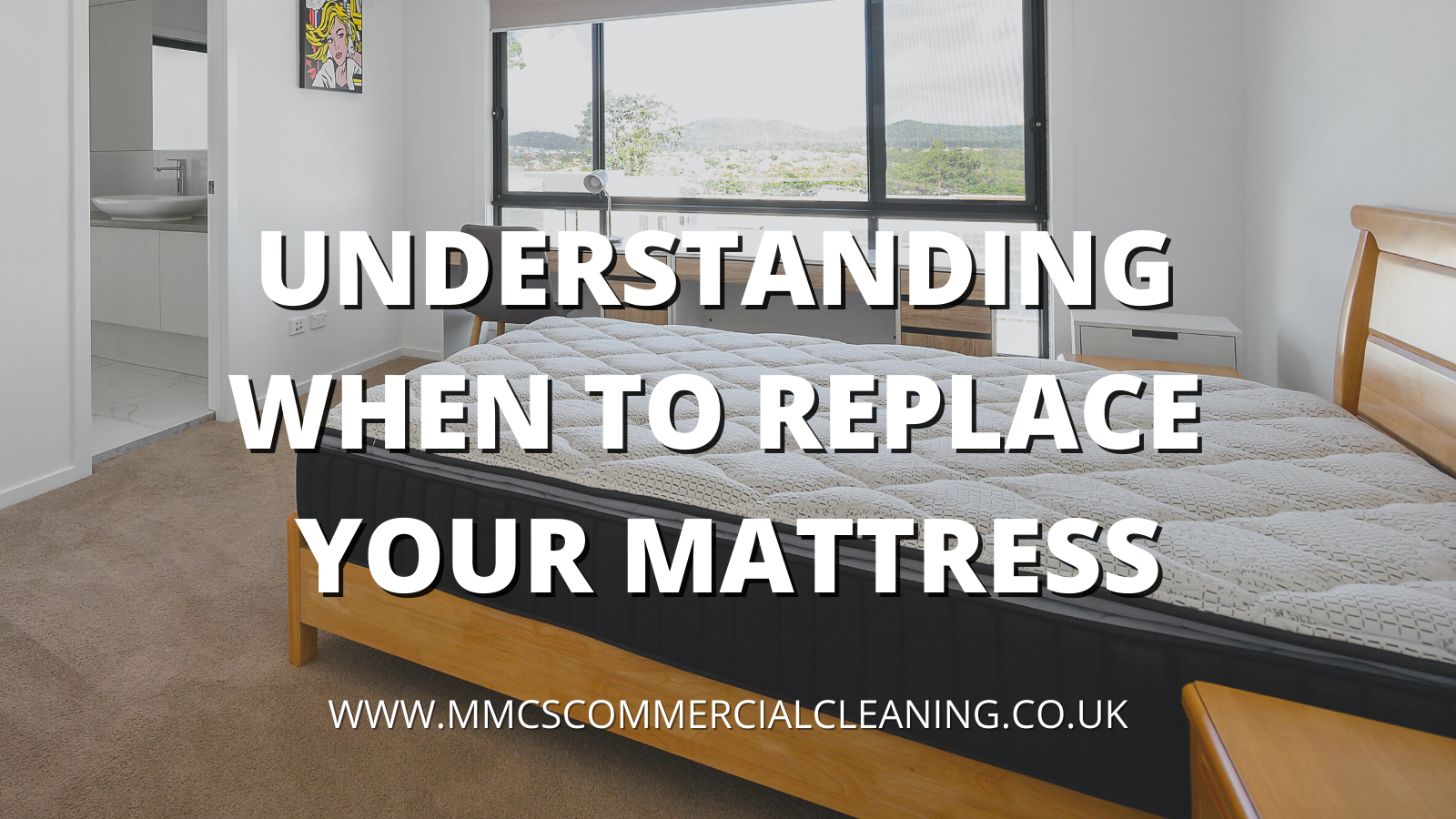
Sleep is one of the most important aspects of our health and one of the biggest factors to getting a good night's sleep is the comfort of a mattress. But how often should you replace your mattress? We've put together some key indicators that show that it's time to replace your bedding. Read our top tips for when it's time to replace a mattress below. At MMCS we have over two decades of experience in cleaning properties across the North East. Our trained staff use environmentally-friendly cleaning materials to make your property sparkle around your schedule. From one-off deep cleans to a regular holiday let changeover service in Northumberland, get in touch to book your service today. Understanding when to replace a mattress Noise Your mattress shouldn't make any loud noises, even if you toss and turn regularly in your sleep. If you start hearing loud sounds such as grinding metal or springs then it could mean that your mattress is not supporting you as well as it could be. As well as keeping you awake throughout the night, the moving springs can create an uneven surface which can later cause body aches and pains. If you notice that your mattress is making noises, it's often a sign that it needs to be replaced. Allergies Dust mites are a common household allergy. The build up of dust can cause allergic reactions such as sneezing, a dry mouth and throat and a runny nose. While regular vacuuming and deep cleaning of the mattress can help to ease this , older mattresses tend to store more dust and could be the root issue for allergy symptoms. If you don't notice any improvement after deep cleaning and vacuuming your mattress, it could be a sign that it needs to be replaced. Aches and pains If you find yourself regularly waking up in pain or stiffness in areas such as your hip, neck, back and shoulders then it could be a sign that your mattress is no longer supporting you. Over time, older mattresses tend to drop and sag in places which reduces support that can impact the alignment of your spine while you sleep. This article focused on understanding when to replace a mattress but you can find a range of environmentally-friendly cleaning guides on our blog.